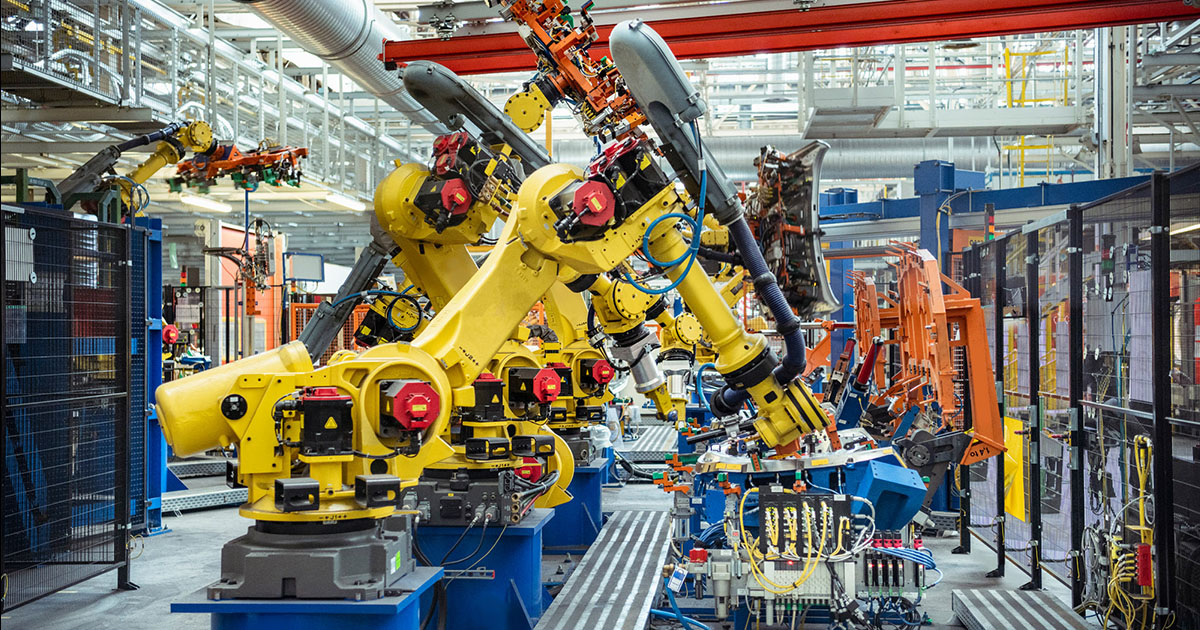
For manufacturing and industrial operations, electric power has always been a major factor in growth. Until recently, though, factories and other power-intensive facilities could count on eventually getting the power they needed from the grid.
It can take years for a new facility to connect to grid power, due to planning, permitting, and transmission construction timelines. But with careful planning, manufacturers could assume that power would be in place by the time a facility was ready to begin operating.
That’s changing. Utilities are struggling to meet increased demands, with the grid connection backlog increasing by 30% in the past few years, according to LBL.
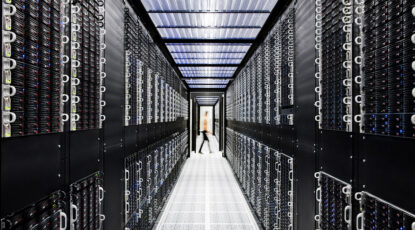
The backlog is driven largely by data centers. Thanks to the booming popularity of AI, data centers are increasing in number and scale, drawing more power than ever. These massive power consumers now pose a significant complicating factor for manufacturers, and they are rapidly changing the market, lengthening connection timelines and potentially increasing costs.
The new competitive reality
McKinsey and Company predicts that the total power load of U.S. IT services (data centers and colocation facilities) is set to almost double, from 82 gigawatts in 2025 to 153 GW in 2028, driven almost entirely by growth in AI workloads. That’s twice the growth rate predicted just one year ago.
Data center developers aren’t slowing down, either. Individual data centers are already attaining gigawatt scale. Bloom Energy’s 2026 Data Center Power Report reveals that by 2030, one out of five data centers will exceed 1GW of power consumption, and by 2035, it will be one in three.
The data center operators are well capitalized, especially the biggest ones, known as “hyperscalers” in the data center world: Amazon Web Services, Google, Meta, Microsoft, and Oracle. They’re moving fast. And they’re competing for the same power that manufacturers need.
Utilities are doing their best, but they can’t keep up. In fact, Bloom’s report revealed that there’s a widening gap between what developers expect and what utilities can deliver. Power customers consistently expect power to be available up to two years sooner than utilities and IPPs believe they can actually deliver that power. In three regions (Northern Virginia, the San Francisco Bay Area, and Atlanta) this gap has been getting wider in just the past six months.
These regions are also key industrial hubs. That spells trouble and potentially rising costs for manufacturers and other operators of power-intensive facilities.
Industrial regions are no longer leading sources of power
Capital is following power. Data center developers are going where they can get power the fastest, and that’s reshaping the national market for all electricity customers.
Large data center loads are increasingly clustering in markets with stronger power availability and faster time-to-power. Even in historically industrial regions like the Northeast, industrial customers must now identify manufacturing energy solutions earlier in their planning than ever to avoid getting squeezed by the competition
Meanwhile, the data center boom is creating new regional leaders. These are parts of the country where time to power is shorter thanks to more favorable permitting pathways, regulatory coordination, and incentive structures. By 2028, Bloom’s Power Report predicts, Texas will account for 30% of national data center capacity, catapulting it into the first position among U.S. geographies; the Southeast will also see growth in data centers. California, Oregon, and Nebraska, on the other hand, will see their market share collapse.
Manufacturers in these power-constrained markets will face a cluster of power problems: Less grid capacity will be available, there will be longer waits for interconnection requests, competition will be fiercer, and all that will drive prices higher.
The upshot: The availability of power and time to power are more crucial factors than ever for manufacturers.
Onsite power: The key to bridging the power gap
Two key options are open to manufacturers that want to maintain their own access to power in this new world dominated by data center demands.
New geographies: Look at markets where data center growth is slower — you’ll find less competition for interconnection. States like Mississippi, Indiana, and Tennessee are seeing increased interest precisely because they haven’t yet been overrun. Power-advantaged doesn’t have to mean Texas-sized competition.
Onsite power: Take yourself out of the competition entirely. When you generate your own power onsite, you’re no longer in the queue.
One-third of hyperscalers already expect to run using only onsite power — completely off-grid — by 2030. If the biggest IT energy users in the world are making that move, manufacturers should take notice too. Onsite power is no longer just for contingencies: It’s now a competitive choice for supplying industrial power.
Fuel cells are a particularly strong fit for manufacturing and commercial plant operators for several reasons:
- Compared to other onsite generation technologies, they deliver faster time to power — often deployable in months, not years, when a facility is off-grid. They’re modular, so capacity scales as demand grows.
- Lower local emissions mean faster permitting and stronger community acceptance. And they align with long-term corporate sustainability commitments like 24/7 carbon-free energy targets.
- When grid power eventually arrives, it complements your onsite generation rather than replacing it — giving you redundancy, flexibility, and control that waiting in line never could.
Onsite fuel-cell systems can provide greater control over power availability during commissioning, expansion, and periods of grid disruption, especially in areas with low grid availability and long interconnection wait times.
When the increased competition from data centers drives utility prices higher, onsite power can be a powerful de-risking strategy for manufacturers.
More broadly, the shift to onsite power reflects a wider shift across large-load sectors: Power strategy is moving earlier in the planning process. As grid constraints become more visible, industrial operators are evaluating a broader set of options to preserve flexibility and certainty as they plan future investments.
No time to wait
This year’s Data Center Power Report makes it clear: Hyperscalers and colocation providers are not waiting. They are moving rapidly to and spurring dramatic changes in the geography of electrical power.
The manufacturers who move now — before the power crunch deepens — will have options. Those who wait for the grid will be facing increasingly long wait times and higher prices.
The Data Center Power report shows exactly how quickly data center developers are moving, and their impact on grid connection timelines. It shows which regions of the US are most affected by data center growth. As such, it’s essential reading for manufacturers who want to understand how the market for electrical power is changing.
The next two to four years will be transformative. In this environment, manufacturers and other large-load power consumers will need to move quickly to adapt. That means shifting power planning earlier in the process, considering new geographies, and installing more onsite power.
To get the full details, download Bloom Energy’s 2026 Data Center Power Report.