Almost every breakthrough in modern hardware begins with a decision most people will never see.
Whether it’s a faster computer chip, a longer-lasting battery, shatter-resistant glass, or a higher-resolution MRI scanner, performance often comes down to how we select, combine, and engineer elements, compounds, and materials.
Bloom’s fuel cells are no different.
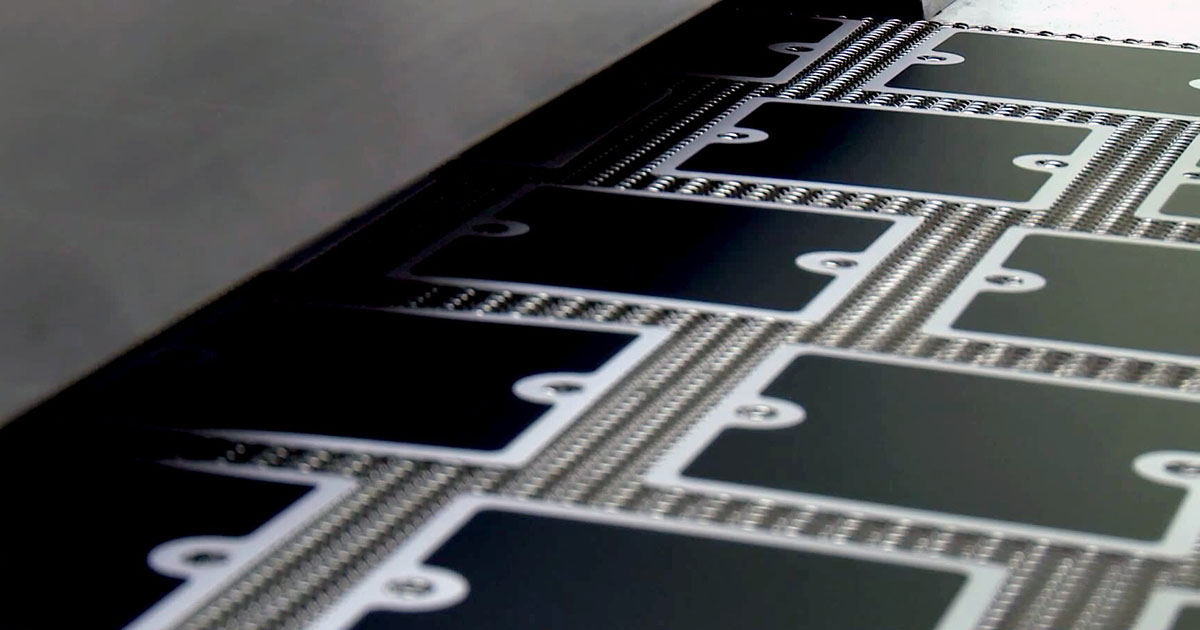
At the core of every Bloom fuel cell is an ultra-thin ceramic substrate, about the thickness of a single human hair. It is made primarily from zirconium oxide, a material used to make everything from industrial furnaces and electrical insulators to dental implants.
Zirconium oxide is produced at industrial scale: more than 1.2 million metric tons are processed each year, with much of the world’s high-purity material used in advanced engineering applications and electronics produced in Japan and the United States from ore mined mostly in Australia and South Africa.
Bloom enhances ultra-pure zirconium oxide with a small amount of scandium oxide. That seemingly small change plays an important role, allowing our fuel cells to perform better, last longer, and use less fuel than earlier generations.
Bloom has developed other materials that can perform a similar role, but scandium oxide remains the best choice for our current fuel cell platform. Our designs and materials constantly evolve.
As Bloom has grown, we’ve received more questions about scandium oxide. Why do we use it? What does it do? Is there enough of it?
Because scandium is often described as a “rare earth material”, it’s natural to wonder how Bloom sources it at scale. The answer lies in understanding both the science and the supply chain.
A better fuel cell starts with a better electrolyte
At the heart of every Bloom fuel cell is an electrolyte, a ceramic layer that makes the fuel cell work.
Its job is remarkably simple: allow oxygen to pass through as easily and efficiently as possible. As oxygen reaches the other side, it reacts with methane or hydrogen to generate electricity.
The performance of that ceramic layer depends on the materials added to it. Scientists refer to these additions as dopants, which are small amounts of another material introduced to improve how well the electrolyte performs. Bloom’s dopant is scandium oxide.
By optimizing the performance of the doped electrolyte, the result is a stack that requires significantly fewer layers of fuel cells to generate the same amount of electrical power.
A tiny ingredient with an outsized impact
Scandium oxide makes up only a fraction of the ceramic material. But because the layer itself is so thin, the total amount of scandium oxide used in each fuel cell is tiny—think of it as a sprinkle of salt on your dinner.
In other words, Bloom’s fuel cells require remarkably small amounts of scandium oxide to achieve a significant improvement in performance.
This combination of a very small material input producing a disproportionately large performance gain is why we use scandium oxide today.
Why scandium is “rare”
The word rare can be misleading. Scandium is abundant, widely distributed throughout the Earth’s crust, more than the amount of lead present on the planet.
The challenge isn’t that there isn’t enough scandium. It’s concentration.
Unlike copper or iron, scandium seldom exists in deposits rich enough to justify mining solely for scandium. Instead, it is dispersed across many minerals in very small quantities. Recovering it through dedicated mining would require processing enormous amounts of ore, making it economically impractical today.
Scarcity, in this case, is primarily an economics problem, not a total availability problem like those associated with precious metals such as gold or platinum.
Rethinking how scandium is sourced
Bloom took a different approach. Many industrial processes already handle minerals that naturally contain scandium, including titanium, nickel, cobalt, and uranium processing.
After these materials are extracted, the remaining tailings or process streams still contain recoverable scandium oxide.
Rather than relying on primary mining, Bloom developed proprietary processes to recover scandium oxide from these existing industrial exhaust streams.
In effect, we transformed industrial waste byproducts into a reliable source of a high-value dopant material. This approach reduces dependence on dedicated mining while creating a scalable source of supply from materials already being processed at a very large scale around the world.
Building a resilient supply chain
In today’s world, technology leadership depends on supply chain resiliency.
Over many years, Bloom has developed proprietary intellectual property and manufacturing know-how to economically recover scandium oxide from multiple industrial sources.
Today, we are able to source scandium oxide from multiple sources and suppliers across multiple countries.
No single supplier determines our destiny. No single country does either. Bloom’s sourcing approach is intentionally diversified, built on proprietary processes and long-standing relationships.
To protect the resilience of our supply chain, Bloom maintains strict confidentiality around its sourcing network. Supplier relationships, sourcing volumes, and procurement strategies are proprietary and are not shared across our vendor base.
We believe we are the world’s largest consumer of scandium oxide, so this capability represents a meaningful competitive advantage that extends well beyond the fuel cell itself.
Sourcing at industrial scale
Titanium processing provides a useful example.
Roughly 10 million metric tons of titanium ore are processed globally each year, the bulk of it to produce titanium dioxide for products such as white paint. These industrial processes generate waste streams that contain recoverable scandium oxide.
More than half of global titanium processing occurs outside China, while countries including Canada and Australia maintain substantial titanium mining operations. Large industrial producers in North America and Europe also generate significant quantities of process material from which scandium oxide can be recovered. Several hundred tons of scandium oxide can be produced from these sources annually.
Additional industrial processes involving other minerals create similar recovery opportunities, providing multiple potential sources for scandium oxide.
The implication is straightforward: Bloom’s supply chain is supported by existing global industrial activity that already produces recoverable scandium oxide as a byproduct in large scale.
Innovation extends beyond the product
When people think about Bloom Energy innovation, they often think about what happens inside the Bloom Box.
Equally important is everything that happens before the fuel cell is ever manufactured. Materials science, process engineering, intellectual property, supply chain robustness and manufacturing efficiency all contribute to the performance, scalability, and resilience of the final product.
Scandium oxide is just one example. It’s a tiny ingredient, but understanding how to source it economically, recover it efficiently, and use it effectively is part of what makes Bloom’s technology difficult to replicate.
The fuel cell is the visible outcome. The innovation behind it runs all the way through to the dirt being used to create it.
That broader approach has become increasingly important as critical minerals have emerged as a focus of geopolitical and economic competition. Building resilient supply chains is no longer simply a procurement exercise—it’s a strategic capability and necessity.
Bloom recognized that reality years ago. By developing proprietary recovery processes and a diversified global sourcing strategy, we built a supply chain designed to support our growth while reducing dependence on any single supplier or country.
We believe that our current diversified global supply chain of scandium oxide can support up to 25 GW per year of production capacity. But that is not the endgame. We plan to expand our scandium oxide supply chain…that’s how you power a planet.
This is one of the world’s greatest developmental challenges. Meeting it will require innovation at every level—from the materials inside a fuel cell to the global supply chains that support it. This is the work Bloom has been doing for over twenty-five years, and it’s the work that continues to drive us forward.
This article was published on July 7, 2026, and is for informational and educational purposes only. Readers are encouraged to read Bloom’s full disclosures, including information on potential risks and uncertainties that may impact Bloom’s business, set forth in its periodic reports filed with the SEC.