Key Takeaways
- U.S. IT load is expected to nearly double from 80 GW in 2025 to 150 GW in 2028, and ERCOT forecasts Texas data center demand to grow from 29 GW to 77 GW by 2030.
- Hyperscalers need reliable electricity in 18 to 24 months, but large loads can wait three to seven years for grid power — and gas turbine deliveries now stretch five to seven years.
- Solid oxide fuel cells generate electricity through an electrochemical process, not combustion, enabling near-zero NOx, SOx, and particulate emissions and faster air permitting.
- Delivering 100 MW at three-nines availability requires 130 to 150 MW of gas turbines, but just 109 MW of fuel cells — dramatically less overbuild and CapEx.
- Fuel cells require no water during normal operation and can deliver 100 MW on a 20,000-square-foot footprint when stacked.
- Sleeve PPAs and large load tariffs let utilities serve big customers quickly while protecting existing ratepayers and funding grid buildout.
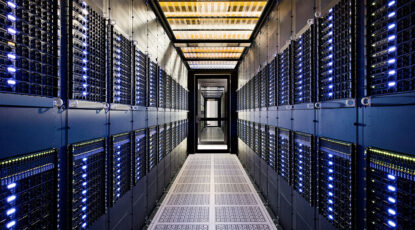
After years of flat or even declining demand, utilities now face an environment where load growth is outpacing their ability to generate and distribute electricity quickly enough. AI is driving an unprecedented surge in data center demand, while manufacturers and other industrial facilities simultaneously need more power.
The scale is striking. According to McKinsey & Company, U.S. IT load alone is expected to nearly double from 80 GW in 2025 to 150 GW in 2028. In Texas, grid operator ERCOT forecasts data center-driven demand to grow from 29 GW to 77 GW by 2030.
“Large industrial customers and data centers will not wait for grid power. This load growth will happen with or without the utilities,” says Devyn Simmons, Senior Manager, Utility and IPP Origination, at Bloom Energy.
Significant growth puts utilities in a delicate position. Meeting this demand provides a historic opportunity to grow revenue and solidify relationships with important new customers. But utilities that can’t move fast enough risk losing those customers to alternative power providers — while leaving ratepayers to cover the cost of stranded grid investments.
Finding Solutions for Customers in a Hurry
Hyperscalers are locked in an ultra-competitive race to harness the AI advantage, with capital expenditures of the top five companies projected to surpass $600 billion in 2026 — a 36% increase over 2025. Every dollar of that investment in GPUs, servers, and facilities needs power.
Current grid timelines can’t match that urgency. Large loads like data centers can wait three to seven years to begin receiving grid power, but hyperscalers need reliable electricity in 18 to 24 months.
To bridge that gap, many utilities are turning to onsite power generation. But the most common technologies in their integrated resource plans (IRPs) have real limitations:
- Gas turbines are in very short supply, with delivery times stretching five to seven years. Even with a turbine in hand, a simple-cycle plant needs another 12 to 16 months of onsite engineering and commissioning, and combined-cycle plants take three to four years to build. Most major EPCs are booked through 2029.
- Reciprocating engines can be installed in smaller blocks, but meeting large data center loads means permitting and connecting dozens of units. Gas pipeline capacity is limited, diesel adds fuel logistics, and emissions approvals can slow permitting for continuously running engines.
- Solar or wind plus storage offers speed-to-power appeal, but AI-scale renewables require enormous land tracts. Plus, the rapid load swings of AI training force batteries to cycle far more than designed — accelerating degradation and driving up replacement costs.
Solid Oxide Fuel Cells 101
One proven solution for utility companies is solid oxide fuel cells. Unlike combustion-driven turbines and engines, solid oxide fuel cells produce electricity through an electrochemical process. In combustion technologies, fuel reacts with oxygen to release heat, and that heat spins a turbine or runs an engine. Fuel cells skip the intermediate steps: fuel reacts with oxygen inside the cell and generates electricity directly.
“We go directly from the chemical energy in the natural gas that fuel cells use today to electric energy. With combustion, you have multiple steps, which leads to a lot more inefficiencies,” explains Akhil Batheja, Senior Director of Technology at Bloom Energy.
For utilities evaluating technologies in their IRPs, four characteristics of fuel cells stand out:
- Scale and commercial viability: Fuel cells are proven at scale. Bloom Energy alone has deployed over 1.8 GW of fuel cell capacity across 1,200 global sites, including data centers.
- Not batteries: Fuel cells are generation assets, not storage. They aren’t subject to cycle-driven degradation, and they can run on natural gas, hydrogen, or biogas — all without combustion.
- Power density: Fuel cells are modular and stackable. A 20,000-square-foot ground-mounted system can provide 30 MW, and stacking four levels high delivers 100 MW in the same footprint.
- Safety: Fuel cells pose no risk of thermal runaway and have earned operating approvals in some of the nation’s most rigorous regulatory environments, including New York City and California wildfire zones.
How Fuel Cells Deliver Power Fast
Speed to power comes down to three factors: permitting, supply chain, and installation.
Permitting moves quickly. Because fuel cells don’t combust fuel, they produce near-zero NOx, SOx, and particulate matter — which accelerates air permitting even in EPA non-attainment areas with the strictest air quality rules. Installations under 50 MW don’t require air permits at all. Additionally, fuel cells need only a small amount of water at startup and none during normal operation, an advantage in regions that strictly control water access.
The supply chain is ready. The multi-year constraints plaguing turbines simply don’t exist for fuel cells. “We have a very robust supply chain, with every critical component being double or triple sourced,” Batheja says. “We have manufacturing capacity of about one gigawatt a year, and we’ve communicated our intent to double that by the end of this year.” The result: megawatt-scale deployments in months, not years.
Installation is modular. Fuel cells can arrive on skids ready to install, eliminating the extended balance-of-plant work and commissioning timelines that turbines and engines require.
Reliability Minus the Overbuild Penalty
Large customers need power fast, but they also need it to be ultra-reliable — between three nines (99.9%) and five nines (99.999%) availability, depending on the customer.
The traditional recipe for high availability is overbuilding. Delivering 100 MW at three-nines availability requires 130 to 150 MW of gas turbines or 120 to 130 MW of reciprocating engines. Meanwhile, the same availability requires just 109 MW of fuel cells since they’re small and fault-tolerant.
“This presents a huge economic advantage. It requires a lot less infrastructure and a lot less CapEx,” Simmons says.
From Bridge Power to Long-Term Grid Asset
The fundamental challenge for utilities is serving large customers quickly while building out grid infrastructure for long-term demand — without dramatically raising rates for everyone else. Two commercial structures have emerged that do all of the above:
- Sleeve power purchase agreements: A fuel cell provider finances the generation and charges the utility per kilowatt-hour. The utility delivers that electricity to its large customer with an agreed-upon markup that funds transmission and distribution buildout.
- Large load tariffs: The utility owns the onsite generation at the customer’s site and charges a rate sufficient to fund needed grid investments.
And when grid power eventually arrives, fuel cells don’t become stranded assets. “Once grid power arrives, it doesn’t have to serve that entire load if the utility keeps the fuel cells there,” Simmons explains. “Fuel cells maintain baseload power, and the grid becomes a more flexible resource.”
Fuel Cells: The Future of Grid Power
Solid oxide fuel cells have emerged as an essential tool for utilities facing the load growth challenge: They’re fast to deploy, highly reliable, and scalable enough to bridge the gap between immediate customer demand and the eventual arrival of grid power — without compromising environmental standards or ratepayer affordability.
To learn more about how Bloom partners with utilities to meet surging demand, visit our utilities industry page or contact us today.