Digital interactions seem to occur in the blink of an eye, but every email sent and payment processed depends on physical infrastructure working in the background. All those interactions pass through servers that require space, power, cooling, and continuous connectivity to keep running without interruption.
Servers and other necessary hardware are stored in data centers, and as long as they’re up and running, the internet as we know it can continue to function. The problem: we always need more data centers, and building and operating even one is expensive. And the challenge isn’t just cost — it’s time. Data centers need enormous amounts of power, and as demand grows alongside AI, obtaining that power quickly has become one of the biggest bottlenecks to bringing new capacity online.
On top of that, it can take years to get one data center permitted and constructed, let alone the number needed to keep up with growing demand. As a result, it’s becoming increasingly impractical for many organizations to build them.
That’s where colocation data centers come in.
What are Colocation Data Centers?
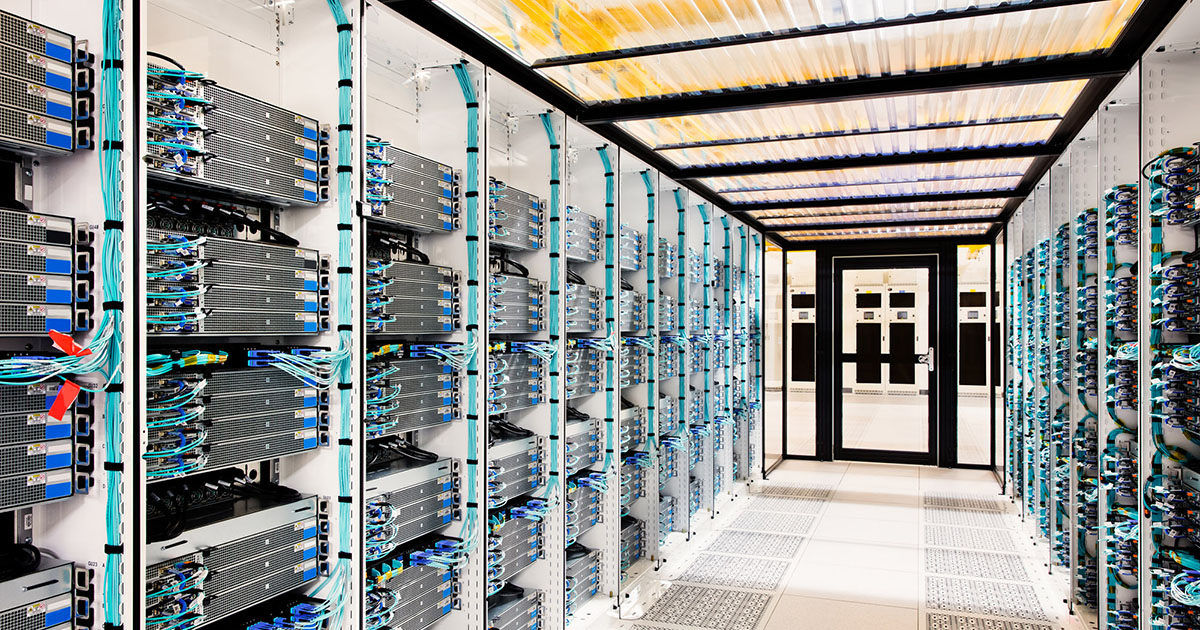
A colocation data center can be somewhat equated to a coworking space. A business can rent out space for its data needs. This may be a single rack, an entire room, or, in some cases, a good chunk of the premises. A single colocation facility, or “colo,” may be home to numerous businesses.
The colocation provider generally pays for and supplies the building, power, cooling, physical security, and network connectivity. Customers lease space and capacity; in some cases, they may install and operate their own hardware and software, while in others, the facility owner may provide the hardware.
The Importance of Colocation
Colocation delivers a cost-effective way for businesses to store their infrastructure without incurring the high costs of building and maintaining their own private data centers.
These colocation data centers are also important because they provide businesses with a safe and reliable storage solution. Secured by physical and digital security measures, these facilities are under constant surveillance. They’re also equipped with cooling systems and backup generators to ensure dependable power and prevent downtime.
Another colocation benefit is the flexibility it offers businesses to scale their operations. As a business grows, it can rent additional space, add more servers, and increase its bandwidth to accommodate its expansion. And just as easily, a business can scale back its operations, reducing the number of racks, consolidating equipment, and leasing less space. Businesses only pay for what they need, so they can remain agile and adapt quickly to industry changes.
Types of Data Centers
To better understand colocation data centers, we need to step back and examine data centers as a whole. There are three primary types: enterprise data centers, colocation data centers, and hyperscale data centers. Each type caters to specific business needs.
- Enterprise data centers are built and owned by companies for their own use. It houses all the equipment and software required to operate a data center, and provides a great degree of control over security.
- Colocation data centers are facilities where multiple organizations can rent space and infrastructure. As described above, it’s a solid option for businesses that are still growing and need the infrastructure of a data center without the associated costs.
- Hyperscale data centers are enormous facilities that can help an occupant grow fast. These are the data centers you most frequently see associated with AI; they’re often owned by tech giants like Amazon AWS or Microsoft Azure.
What Type of Facility Makes Sense for You?
And now we come to the question so many companies struggle with: Should we invest in our own data center or go the colocation route?
Here’s what to consider:
Enterprise Data Centers
If you opt for an enterprise data center, you’ll build and run your own facility.
Pros:
- You have total control over your equipment, software, and data.
- You have no dependency on outside companies.
- Your data stays on your property.
- You can customize your data center to meet your exact needs.
Cons:
- They’re very expensive to build.
- You’ll need a highly-trained IT staff to maintain them.
- You pay for power and cooling — both expensive.
- If you want to expand later, you’ll find it both expensive and difficult.
Choose an enterprise data center if you need maximum control and/or have sensitive data, and can afford the investment.
Colocation Data Center
If you choose a colocation data center, you’ll rent space in a professional facility but own your equipment.
Pros:
- You still own and control your hardware.
- You operate in a professional facility that has backup power.
- You’ll face much lower startup costs (i.e. no need to build your own data center).
- It’s easy to add more space/racks when you grow.
Cons:
- You need to pay monthly fees for space, rent, and power.
- There are often lengthy contract commitments.
- You often still have to manage the hardware yourself.
Choose a colocation data center if you want to own your equipment, but don’t want to build, maintain, or pay for the facility.
Hyperscale Cloud Data Center
If you choose a hyperscale cloud data center, you rent computing power — and that’s it.
Pros:
- You only pay for what you use.
- You can scale up (or down) instantly.
- There is no hardware to buy or maintain.
- You can access it from anywhere in the world.
Cons:
- Costs can and do add up over time.
- You have less control over the actual infrastructure.
- Your data is stored by another company.
- Bills can be unpredictable due to changes in energy demand rates, ongoing cooling requirements, and necessary power grid upgrades.
Choose a hyperscale cloud data center if you want flexibility without managing hardware (and need to scale quickly).
Choosing the Right Colocation Data Center
If colocation is looking like an appealing option, then let’s discuss what you should look for while making your colocation facility selection.
Cost should be one of the first considerations. Yes, colocation is considerably less expensive than building and managing your own data center, but it’s still an expense. In addition to paying for the physical space, a business is responsible for costs associated with power, cooling, bandwidth, and additional services, such as technical support. Other factors that may influence the price include the data center’s location and whether it’s considered a high- or low-tier data center. Depending on the colocation facility, it may offer fixed monthly pricing or usage-based plans.
Reliability is another important factor, which is determined by redundancy and uptime, though not mutually exclusive. For example, low-tier data centers typically have low uptime and no redundancy, while high-tier data centers have high uptime and redundancy. When choosing a colocation facility, inquire about the center’s network connectivity and redundant power sources, such as backup generators and uninterrupted power supplies.
Furthermore, as a business grows and adapts to changes, it needs a flexible infrastructure that evolves alongside it. That’s why it’s crucial to choose a colocation that supports scalability. The colocation facility should offer the option to adjust space, resources, and bandwidth according to a business’s specific needs.
Another consideration is data center interconnection. Interconnection refers to the exchange of data among all systems and cloud providers within a shared data center. These facilities create private connections, which can reduce latency, improve speed and performance, support flexibility, and even enhance security. There are several types of interconnection, such as cross-connects, internet connectivity, and cloud connectivity, so it’s important to explore the available methods to ensure the colocation facility can support your infrastructure and connectivity needs.
Colocation Data Centers and Power Consumption: Cleaner Power is Possible
Colos suffer from the same problem as regular data centers: they must deliver electricity to large numbers of servers while managing the heat those systems generate. Not surprisingly, energy use and power reliability have become central concerns, as has the impact data centers have on both local power grids and the environment.
These aren’t new problems, but they are becoming more prevalent. The Department of Energy recognizes data centers as “energy-intensive buildings,” consuming up to 50 times more energy per floor than a regular office building. And in our 2026 Data Center Power Report, colocation providers cited power availability time to power as a key decision factor when evaluating energy strategies.
To address these challenges, many colocation operators are turning to on-site energy solutions, which address all four issues. In particular, newer technologies like Bloom’s solid oxide fuel cell systems generate electricity where it’s needed, offering a steady supply that produces lower emissions than traditional power systems. It also reduces a company’s exposure to fluctuating (and often volatile) energy markets and provides faster access to power in constrained regions.
The demand for digital infrastructure isn’t going anywhere; indeed, it’s only accelerating. These factors are shaping how and where new colocation capacity comes online, and operators must balance performance and cost with environmental responsibility; as a result, energy strategy has become a defining factor in long-term success.
Want to learn more about Bloom’s initiatives and how we’re working to better the energy industry? Contact us today.
References
https://www.coresite.com/blog/colocation-a-sustainable-data-center-alternative
https://www.energy.gov/eere/buildings/data-centers-and-servers
https://www.fortinet.com/resources/cyberglossary/colocation-data-center
https://www.equinix.com/what-is-colocation
https://www.coresite.com/blog/why-choose-colocation-here-are-seven-good-reasons
https://www.databank.com/resources/blogs/understanding-interconnection-in-colocation-data-centers/
https://www.coresite.com/blog/hybrid-cloud-and-colocation
https://www.bloomenergy.com/blog/how-data-centers-are-tackling-sustainability-challenges/
https://www.energy.gov/femp/energy-efficiency-data-centers
https://coloradosun.com/2025/12/10/data-center-power-demands-colorado-xcel-tri-state/