As data center construction accelerates to keep pace with AI, communities nationwide are increasingly concerned about how that development impacts them. In the last six months alone, nearly 30% of data center developers report increased community scrutiny on their projects, according to our 2026 Mid-Year Data Center Power Report.
That data reflects a broader trend: more than 70% of Americans oppose AI data centers being built near their homes, according to a Gallup survey conducted in March, and $64 billion of data center projects have been blocked or delayed amid local opposition. Communities are concerned about rising local electricity prices, air and noise pollution, and the strains data centers may cause on their water resources and power grid reliability.
But there’s a disconnect between data center developers’ community engagement efforts and community priorities. In developers’ community engagement, just 33% talk about investing in grid support and resiliency, while less than a third address minimizing water consumption. Yet these top the list of communities’ concerns across nearly every region of the country.
Solutions that reduce these local impacts are increasingly critical for both communities and data centers to succeed.
What is onsite power?
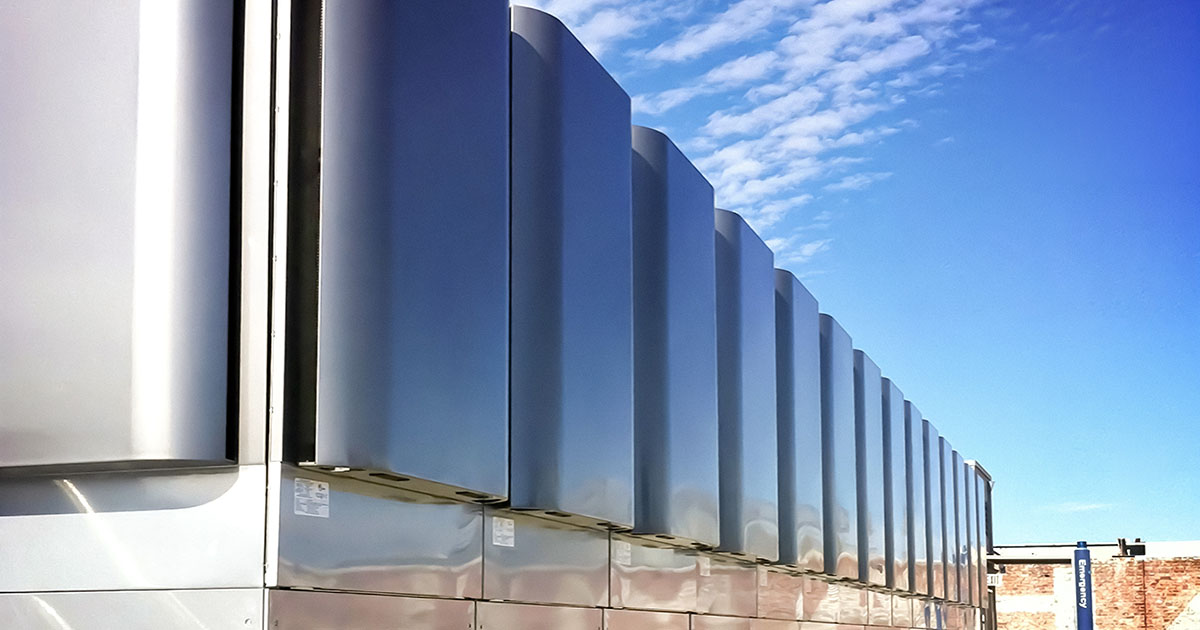
Onsite power means physically creating power at the location where it’s used. Examples include fuel cells as well as natural gas engines and turbines. Onsite power sources vary in their emissions outputs, noise levels, and water use. Most legacy ones, including gas turbines and diesel generators, work by burning fuel to create heat. That combustion process produces exhaust, noise, and air pollutants — which are among communities’ top concerns about data centers, according to the Gallup survey. Fuel cells convert natural gas, hydrogen, or biogas into electricity without using combustion.
Certain kinds of onsite power can help address community concerns about data centers:
Stabilize electricity prices and bolster grid reliability: Some data centers use onsite power to generate all of their electricity, meaning they’re not connected to the power grid and don’t impact nearby residents’ electricity bills or grid stability. As Congress considers a bill that would urge data center developers to cover the entirety of their power costs, data centers using onsite power “off grid” are at an advantage because they already do so.
Onsite power can also reduce strain on local transmission and distribution infrastructure and serve large loads without relying on the grid. This means these data centers don’t increase the risk of blackouts or grid instability for nearby residents, even during severe weather. That issue is becoming more urgent as extreme heat threatens nearly every region in the country during summer months.
Reduce water consumption: Data center developers are making widespread efforts to reduce their water usage, and some onsite power technologies can play a significant role in reducing or eliminating excess water consumption. While fossil fuel- and nuclear-based energy systems do use water, some kinds of fuel cells require no water during normal operations. As a result, fuel cells use a tiny fraction of the water that legacy combustion generators do.
Decrease carbon emissions: As other energy technologies advance, they can operate alongside onsite power to help data center operators continue addressing communities’ concerns. For example, data centers can reduce their greenhouse gas emissions with carbon capture, utilization, and storage (CCUS), a process that captures carbon dioxide emissions and stores or repurposes so that it doesn’t enter the atmosphere. 41% of US data centers that use onsite power expect to incorporate CCUS by 2035.
Onsite power can reshape how data center developers plan new projects and engage local communities. About a third of all US data centers are expected to run entirely on onsite power by 2030. This will help bring their economic benefits to communities without the environmental impacts that rightfully concern residents today.
To learn more about how fuel cells provide AI data centers with community-friendly power, download the 2026 Mid-Year Data Center Power Report.
The insights, projections, and forward-looking statements contained here are for informational purposes only. These are based on assumptions and information currently available.