Key takeaways
- Bring Your Own Power (BYOP) means generating electricity at or near the location using it, working alongside grid power or independently in islanded mode.
- U.S. electricity supply is anticipated to fall short of peak demand within two years, heading toward a 175GW capacity shortage by 2033 — enough to power New York City 20 times over.
- Industrial electricity prices historically grew about 1.9% per year, but retail electricity prices rose an average of 5% in the past year.
- Ohio industrial electricity rates were 35% higher from February 2025 to February 2026.
- High winds and a Nebraska wildfire left 450,000 customers in Ohio, Pennsylvania, and Michigan without power in March 2026.
- Reaching 3-nines availability at 100 MW requires 33% overbuild with reciprocating engines but only 9% overbuild with fuel cells.
- Fuel cells can deliver 50 MW in months, where grid power, solar, diesel generators, and reciprocating engines are all measured in years.
- Ferrari cut fuel use by roughly 20% and harmful air pollutants by more than 99% at its Maranello production facility with Bloom fuel cells.
For over a century, power-intensive manufacturers have relied on the grid as a reliable, high-quality source of electricity. That’s starting to change.
Electricity demand is growing around the world, often driven by the high power consumption of the digital economy. In the U.S., grid capacity is not keeping up.
The strain is showing: More outages. Lower quality power. Longer wait times to install new interconnections. Less predictable pricing.
What’s the solution to all of these barriers? Onsite power, which can supplement grid power or serve as a primary power source for a manufacturing facility. While many energy-intensive manufacturers have already started to embrace onsite power, it’s a new world for many others.
Bring your own power
Onsite power, also referred to as decentralized or distributed power or “Bring Your Own Power” (BYOP), means generating electricity at or near the location using it, rather than relying solely on the grid. It can work alongside grid power or operate independently in “islanded mode,” giving manufacturers greater reliability, higher power quality, and a faster path to expansion.
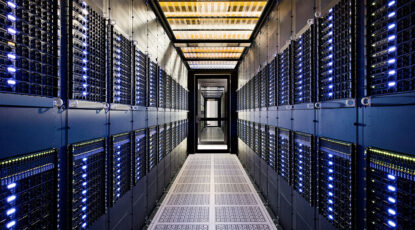
Data center builders are leading this trend. One-third of big data centers expect to be powered entirely by onsite power by 2030, according to Bloom Energy’s 2026 Data Center Power Report.
Manufacturers have long used UPS systems or diesel generators to provide backup power for short outages. But given the issues with utility capacity, price, and power quality, they’re increasingly using onsite power systems as a more permanent supplement to grid power.
Power-intensive manufacturers are embracing BYOP, with industrial customers like Conagra, Ferrari, and Quanta Computer relying on clean, reliable onsite power.
Find out more about how to evaluate BYOP solutions in our playbook for manufacturers here.
The need for a reliable power grid alternative
Let’s take a look at the problem grid operators across the U.S. are facing today.
The nation’s electricity supply is anticipated to fall short of anticipated peak demand within two years, and if the trend continues, there will be a 175GW capacity shortage by 2033 — enough energy to power New York City 20 times over.
Costs are also rising. Historically, industrial electricity prices have grown at a moderate pace of 1.9% per year, but retail electricity prices rose an average of 5% in the past year. In some regions, it’s even more acute: In Ohio, for instance, electricity rates for industrial customers were 35% higher from February 2025 to February 2026.
And outages are increasingly common. For example, in March 2026, high winds and a Nebraska wildfire left 450,000 customers in Ohio, Pennsylvania, and Michigan without power.
For manufacturers, outages mean work stoppage as well as lost product and wasted time resetting equipment or flushing their systems.
Onsite power options for energy independence
Here’s a quick look at the most common BYOP solutions:
Diesel Generators and Gas Turbines: These are the traditional solutions for onsite power. These decades-old technologies are familiar to many manufacturers as a backup power source, but they emit harmful pollutants and generate a lot of noise.
Solar and Energy Storage: Solar power can deliver clean energy at increasingly cost-effective rates — as long as the sun is shining. Solar needs to be supplemented with large battery energy storage systems (BESS) to deliver consistent, reliable power.
Fuel Cells: This technology generates electricity through a solid-state electrochemical reaction instead of combustion, producing negligible amounts of emissions, using minimal water, and operating almost silently.
How do the options for powering manufacturing facilities stack up?
| Grid power | Solar photovoltaic (PV) | Diesel generators | Reciprocating engines | Fuel cells | |
| Fuel source | Mixed fuel source | Sunlight | Diesel | Natural gas | Natural gas, biogas, biomethane, blended hydrogen, or 100% hydrogen |
| Reliability | ~2 hours of outages per year, equivalent to ~99.97% availability | Intermittent resource that requires a stable base load system. | Variable, depends on regular maintenance | For 3-nines availability for 100 MW, requires 33% overbuild | For 3-nines availability for 100 MW, requires only 9% overbuild |
| Time to power | Years, if new transmission lines are needed | Years | Years | Years | 50 MW in months |
| Sustainability | Depends on utility | Clean, quiet, but requires large open areas | Noisy, emits particulates and other harmful pollutants | Noisy, emits harmful pollutants | Clean, quiet, compact, minimal water use |
| Cost predictability | Increasing, very unpredictable in some regions | Low O&M | Higher O&M costs due to lower efficiency | Higher O&M costs due to lower efficiency | Lower O&M costs due to higher efficiency |
How to choose onsite power
When evaluating power options, manufacturers have several choices. And the decision is complex. For most manufacturers, procuring onsite power is new territory. The wrong choice can put schedules, costs, and community relationships at risk.
There are a few core criteria for manufacturers to examine for each potential solution:
- Reliability and power quality – how much guaranteed uptime does it deliver, and how consistent is the power quality?
- Time to power – how long will it take to install and bring it online? And are there supply chain shortages affecting delivery of the generation and transmission equipment?
- Sustainability – what kind of pollutants does it emit? How much noise does it make? What is the impact on water usage and community relations?
- Cost predictability – will the costs remain consistent or fluctuate unpredictability? What will you spend on power over the lifetime of the solution?
Want to know more? Read the BYOP playbook for manufacturers.
Large manufacturers trust Bloom Energy
Bloom Energy is a global leader in fuel cell technology. Its fuel cell platform has demonstrated reliability in rugged environments and during extreme events and natural disasters — including hurricanes, floods, wildfires and earthquakes — providing resilience when it matters most.
Many industrial customers are finding that Bloom power servers are successfully insulating them from grid capacity, reliability, and power quality issues, while giving them more predictable pricing and a compelling sustainability story. For example:
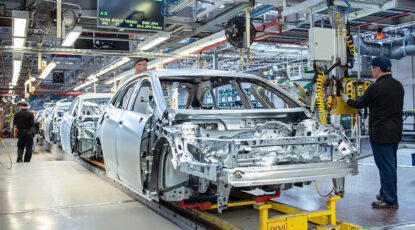
- Ferrari, the global luxury automotive manufacturer, partnered with Bloom to support its path to carbon neutrality—reducing fuel use by ~20% and cutting harmful air pollutants by more than 99% while improving overall energy efficiency at its Maranello production facility.
- A global semiconductor manufacturer based in the U.S. was looking to expand production, and faced challenges securing reliable, cost-effective power. Bloom delivered 11.8 MW of advanced microgrid fuel cells across three of this manufacturer’s sites in New Jersey and Pennsylvania.
- Walmart has more than 40 Bloom installations at stores and distribution centers in California, providing up to 60-75% of the facilities’ electrical load.
Bloom Energy is a proven solution for BYOP, and a growing number of major industrial customers trust it to provide a clean, reliable, cost-effective source of power.
Want to find out more? Click to download here.