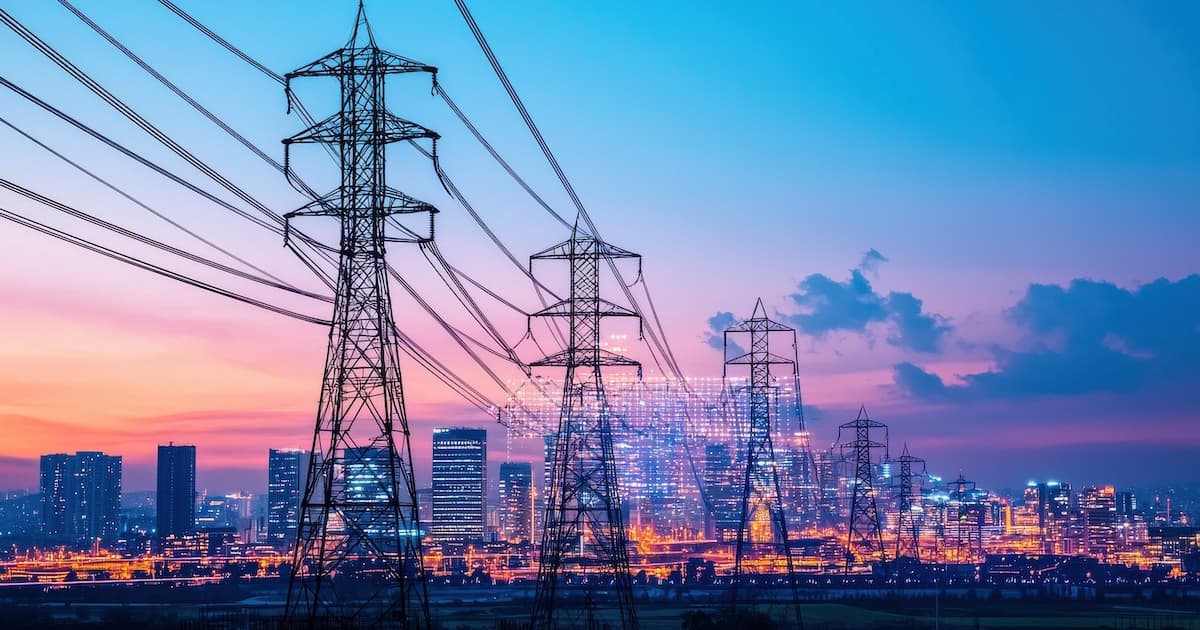
Today’s utility leaders are challenged with unprecedented load growth that markets have not seen since the 1980s. In the United States alone, electricity demand is expected to add the equivalent of California’s current power consumption to the national total over the next three years. Power providers need to prepare for data center and electrification growth while also managing extreme weather risks and ensuring customer electric rates remain competitive.
Meeting growing energy demand and maintaining reliable, resilient, and sustainable power is a formidable undertaking. It requires innovation, creativity, and flexible technologies capable of addressing immediate power needs while supporting the transition to a decarbonized economy.
Navigating converging demands with fuel cells
Fuel cells can be part of a multi-pronged approach to help utilities navigate these converging demands. Using hydrogen, biomethane or natural gas as a feedstock, fuel cells utilize electrochemical reactions to convert chemical energy directly into electrical energy. They have numerous benefits for utilities:
- Proven Technology: Fuel cells are tested and proven. Bloom Energy has deployed over 1.5 GW leveraging over $6 billion in project financing with companies like Duke, Southern, and Exelon, including the largest commercial procurement of fuel cells in the world to date with AEP for up to 1 gigawatt.
- Scalability: Scalable and modular, fuel cells can be installed at or adjacent to customer facilities or at distribution substations, creating maximum flexibility for utility distribution engineers. Furthermore, their deployment can be staggered, allowing the utility to increase generation in line with its demand growth.
- Clean Energy: Because fuel cells utilize an electrochemical process without combustion, they reduce smog-forming local air pollution by more than 99%. Bloom’s high efficiency fuel cells reduce CO2 by nearly 45% compared to displaced marginal resources on the US grid while using a tiny fraction of the water needed by legacy combustion generators.
- Time to Power: Customers are requesting new electric service on compressed time schedules. Bloom’s distributed solutions enable utilities to provide clean and reliable power to critical customers in months, not years.
- Avoid Ratepayer Impacts: The use of distributed, customer-sited solutions allows the cost of serving large loads to be “ring-fenced” to avoid cost shifts to non-participating ratepayers.
For utilities under pressure to support the digital economy while managing climate risks and ensuring reliable, resilient, and affordable power for their customers, fuel cells are an excellent solution.
Meeting soaring energy demand
Electrification and the emerging AI economy are driving unprecedented energy demand. According to our 2025 Data Center Power Report, data centers alone could account for 8-12% of total U.S. power demand by 2030. Lack of transmission capacity and slow regional transmission organization queues threaten utilities’ ability to meet this need.
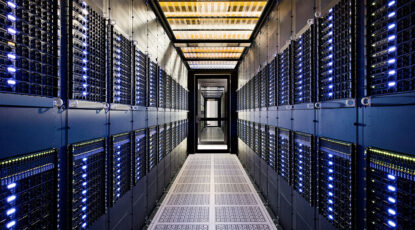
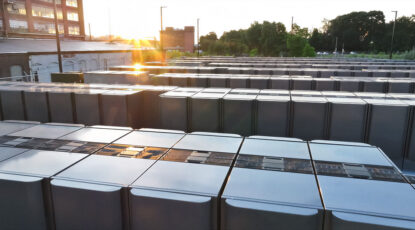
Because Bloom’s Energy Server® fuel cell systems can be deployed in months, not years, they can provide both permanent and bridge power to alleviate transmission constraints and support growing loads like those from data centers. Incredibly power-dense, fuel cells can maximize land use efficiency with up to 100MW deployed in a single acre. Bloom’s solution is cost-competitive compared to other legacy thermal generation solutions making it an economically viable option for providing data center and customer power alike.
Consider our partnership with American Electric Power (AEP) as an example. AEP will use Bloom Energy Server systems to provide timely and reliable power to serve the immediate needs of new data centers in its service territory. AEP plans to use the Bloom systems to supply on-time power to large data center loads during the 5-7+ year time frame that will be required to permit and build out its traditional transmission solutions to the area. The net result is that the utility retains customers, the state avoids losing economic development from businesses migrating elsewhere, data centers can power up immediately, and utility ratepayers are protected from cost increases.
Ensuring resiliency and reliability for customers
As utilities execute long-term grid resiliency projects, extreme weather like wildfires and hurricanes pose an immediate threat. Cost-effective solutions that can quickly address generation needs and ensure communities have reliable power during crises are a must-have. At the same time, utilities need affordable power that reduces overall operational expenses.
Modular and scalable, Bloom’s Energy Server platform offers higher reliability, resiliency, and availability compared to other legacy technologies. This means fewer outages, faster recovery times, and higher power quality for customers.
Utilities are in the challenging position of addressing climate change without compromising reliability and resilience to withstand weather events, cybersecurity threats, and other grid outages. Our Energy Server platform offers inherent reliability and resilience as a microgrid. The modular and fault-tolerant design includes multiple power generation modules that operate independently and can provide uninterrupted services for the most demanding critical infrastructure.
Moreover, Bloom’s fuel flexible platform can run on natural gas, biogas, hydrogen or a combination of fuels. The non-combustion process of our Energy Server systems significantly reduces carbon dioxide and air pollution compared to traditional combustion power generation. Our investments and innovation in heat capture and carbon capture technologies further enhance the value proposition of our core offering by future proofing our customers through multiple decarbonization options.
Maintaining safe and community-friendly operations
Safety and positive community relations are top priorities for utilities, especially given customer concerns about how the growth in AI data centers will impact utility bills and local communities. Bloom Energy’s distributed solution with de minimus criteria pollutants, very low noise, and minimal water use, can help mitigate impacts on local communities without increasing electricity costs for other ratepayers.
Bloom fuel cells represent one of the cleanest presently feasible ways for utilities to generate and deliver ultra-reliable electricity to large and challenging loads like data centers in response to customer time pressure – without creating stranded assets or ratepayer impacts. To learn more about how Bloom Energy can help you provide reliable, resilient, and affordable clean energy, get in touch with an energy consultant today.